Starting a skincare routine can feel confusing when there are cleansers, toners, serums, exfoliants, moisturizers, sunscreens, and countless trending ingredients to choose from. The good news is that a skincare routine for beginners does not need to be complicated.
A simple routine built around cleansing, moisturizing, and sun protection is enough to create a strong foundation. Once you understand how your skin responds, you can gradually introduce targeted products such as vitamin C, niacinamide, retinol, or hydrating serums.
This beginner-friendly guide explains how to build an easy skincare routine, what order to use your products, and how to avoid some of the most common mistakes.
Why Keep Your Skincare Routine Simple?
More products do not automatically mean better skin.
Using too many active ingredients at once can make it difficult to know which products are helping and which may be causing irritation. Beginners are usually better off starting with a few essentials and adding products gradually.
A simple skincare routine can help you:
- Keep your skin clean
- Maintain hydration
- Support the skin barrier
- Protect your skin from the sun
- Identify which ingredients work well for you
- Avoid unnecessary product overload
Think of skincare as building a foundation rather than trying everything at once.
Step 1: Understand Your Skin Type
Before choosing products, it helps to understand your general skin type.
Normal Skin
Normal skin generally feels balanced and is neither excessively oily nor very dry.
Look for gentle products that maintain hydration without being too heavy.
Dry Skin
Dry skin may feel tight, rough, flaky, or uncomfortable.
Look for ingredients such as:
- Hyaluronic acid
- Glycerin
- Ceramides
- Squalane
- Moisturizing oils
Cream-based moisturizers may also work better than very lightweight gels.
Oily Skin
Oily skin tends to produce more sebum and may appear shiny, particularly around the forehead, nose, and chin.
Choose lightweight, non-greasy formulas and gentle cleansers rather than aggressively stripping the skin.
Combination Skin
Combination skin can be oily in some areas and dry or normal in others.
For example, your T-zone may become oily while your cheeks remain relatively dry.
Balanced, lightweight products are often a good starting point.
Sensitive Skin
Sensitive skin may react more easily to fragrances, strong exfoliating ingredients, or highly concentrated active products.
Start slowly, look for gentle formulas, and patch-test new products whenever possible.
The Simple Morning Skincare Routine
A beginner morning routine can be surprisingly simple:
Cleanser → Treatment/Serum → Moisturizer → Sunscreen
You do not necessarily need every step immediately.
Step 2: Cleanse Your Skin
Cleansing helps remove sweat, excess oil, environmental buildup, and skincare residue.
For most beginners, choose a gentle facial cleanser that leaves the skin feeling comfortable rather than tight.
What to look for
Consider cleansers described as:
- Gentle
- Hydrating
- Fragrance-free
- Non-comedogenic
- Suitable for your skin type
If your face feels extremely tight after cleansing, your cleanser may be too harsh for your skin.
How to cleanse
Wet your face with lukewarm water, apply a small amount of cleanser, gently massage it over the skin, and rinse thoroughly.
Avoid excessively hot water and aggressive scrubbing.
Step 3: Add a Serum — Optional for Beginners
You can build an effective routine without a serum, but serums can help address specific skincare goals.
If you decide to add one, start with one targeted serum rather than several at once.
Hyaluronic Acid
A hyaluronic acid serum is a popular choice for people looking for additional hydration.
It can fit into both morning and evening routines.
Vitamin C
Vitamin C is commonly used in morning skincare routines for antioxidant and brightening support.
For example, a product such as Advanced Clinicals Vitamin C Serum can be incorporated after cleansing and before moisturizer.
If you’re new to vitamin C, introduce it gradually and follow the manufacturer’s instructions.
Niacinamide
Niacinamide is another versatile skincare ingredient and is commonly found in products intended for:
- Oil balance
- Skin-barrier support
- Uneven-looking skin tone
- General complexion care
Beginners should resist the temptation to start several strong active ingredients at the same time.
Step 4: Moisturize
Moisturizer is important for virtually every skin type—including oily skin.
A good moisturizer helps reduce water loss and supports the skin barrier.
Dry skin
Consider a richer cream containing moisturizing ingredients such as ceramides, glycerin, or hyaluronic acid.
Oily skin
Try a lightweight gel or lotion-style moisturizer.
Sensitive skin
Look for simple formulas with fewer potential irritants and little or no fragrance.
Apply moisturizer after your serum while your skin still feels slightly hydrated.
Step 5: Never Forget Sunscreen
Sunscreen is one of the most important steps in a daytime skincare routine.
Apply a broad-spectrum sunscreen with SPF 30 or higher as the final step of your morning skincare routine.
It is particularly important when using ingredients that can increase sensitivity to sunlight.
Sunscreen can also help protect the skin from visible signs of premature sun-related aging.
When should sunscreen be applied?
Use it after moisturizer and before makeup.
Remember to follow the amount, application, and reapplication instructions on the product label.
A Simple Evening Skincare Routine for Beginners
Your nighttime routine can be:
Cleanse → Serum/Treatment → Moisturizer
If you wear makeup or water-resistant sunscreen, you may want to consider double cleansing.
Step 6: Try Double Cleansing When Needed
Double cleansing is especially popular in Korean skincare routines.
The idea is simple:
First cleanse
Use an oil-based cleanser to dissolve:
- Makeup
- Sunscreen
- Excess sebum
- Oil-based buildup
Second cleanse
Follow with a gentle water-based facial cleanser.
For example, Anua Heartleaf Pore Control Cleansing Oil can be used as the first step of a double-cleansing routine.
Apply cleansing oil according to the product instructions, emulsify it with water, rinse, and follow with your regular facial cleanser if appropriate.
You do not necessarily need to double cleanse every time you wash your face. It can be particularly useful in the evening when removing makeup or sunscreen.
Step 7: Introduce Active Ingredients Slowly
After following a basic routine consistently, you may decide to address particular concerns.
Common skincare actives include:
Vitamin C
Often used for antioxidant and brightening support.
Niacinamide
Popular for general skin-barrier and complexion support.
Retinol
Frequently used in routines focused on texture and visible signs of aging.
Salicylic Acid
Common in products formulated for oily and acne-prone skin.
AHAs
Ingredients such as glycolic and lactic acid are used for exfoliation.
Do not introduce several strong actives at the same time.
Start with one product and observe how your skin responds.
What Order Should Beginners Apply Skincare Products?
One of the most common questions is: Which skincare product goes first?
A simple rule is to apply products from lighter to heavier textures.
Morning
- Cleanser
- Toner — optional
- Serum
- Moisturizer
- Sunscreen
Evening
- Cleansing oil — if needed
- Facial cleanser
- Toner — optional
- Serum or treatment
- Moisturizer
You don’t need to include every step.
A three-product routine can still be perfectly reasonable.
Your Essential 3-Step Beginner Routine
Feeling overwhelmed?
Start here.
Morning
1. Gentle cleanser
Clean your skin without over-stripping it.
2. Moisturizer
Support hydration and your skin barrier.
3. SPF 30+ sunscreen
Protect exposed skin from UV radiation.
Evening
1. Cleanser
2. Moisturizer
That’s enough to establish consistency.
After several weeks, you can decide whether your routine needs additional products.
5 Common Beginner Skincare Mistakes
1. Using Too Many Products
Buying an entire 10-step routine at once can make skincare unnecessarily complicated.
Start with the essentials.
2. Changing Products Too Quickly
Skincare is rarely an overnight process.
Give products time to fit into your routine unless you experience irritation or another reason to discontinue them.
3. Over-Exfoliating
Using acids, scrubs, retinoids, and exfoliating cleansers together can be too much for some skin types.
More exfoliation isn’t necessarily better.
4. Skipping Sunscreen
A detailed skincare routine loses some of its value if you’re ignoring daily sun protection.
Make SPF part of your morning routine.
5. Following Every Social Media Trend
Trending skincare products can be interesting, but that doesn’t mean every viral ingredient is appropriate for your skin.
Choose products based on your own needs.
How Many Skincare Products Does a Beginner Need?
You can start with just three core products:
Then you might add:
- Cleansing oil
- Hydrating serum
- Vitamin C serum
- Niacinamide
- Retinol
- Exfoliating treatment
as your routine develops.
A beginner doesn’t need ten products simply because someone else’s skincare routine contains ten steps.
How to Choose New Skincare Products
Before adding something to your routine, ask:
What problem am I trying to address?
If you cannot answer that question, you may not need another product.
For example:
Hydration → Hyaluronic acid serum
Daily moisture → Moisturizer
Brightening → Vitamin C
Oil/complexion support → Niacinamide
Makeup/SPF removal → Cleansing oil
Sun protection → SPF 30+ sunscreen
This approach keeps your routine intentional.
Where K-Beauty Fits Into a Beginner Routine
You don’t need an elaborate Korean skincare routine to enjoy K-Beauty.
Many K-Beauty products can simply replace or complement products you already use.
For example:
Oil Cleanser → Gentle Cleanser → Serum/Essence → Moisturizer → Sunscreen
Popular K-Beauty categories include:
- Cleansing oils
- Essence toners
- Hydrating serums
- Snail mucin essences
- Lightweight moisturizers
- Korean sunscreens
- Sheet masks
The key is still simplicity.
Explore products that serve a specific purpose rather than adding steps simply because they are popular.
Build a Routine You Can Actually Follow
The best skincare routine isn’t necessarily the most expensive or complicated one.
It’s the routine you can follow consistently.
Start with:
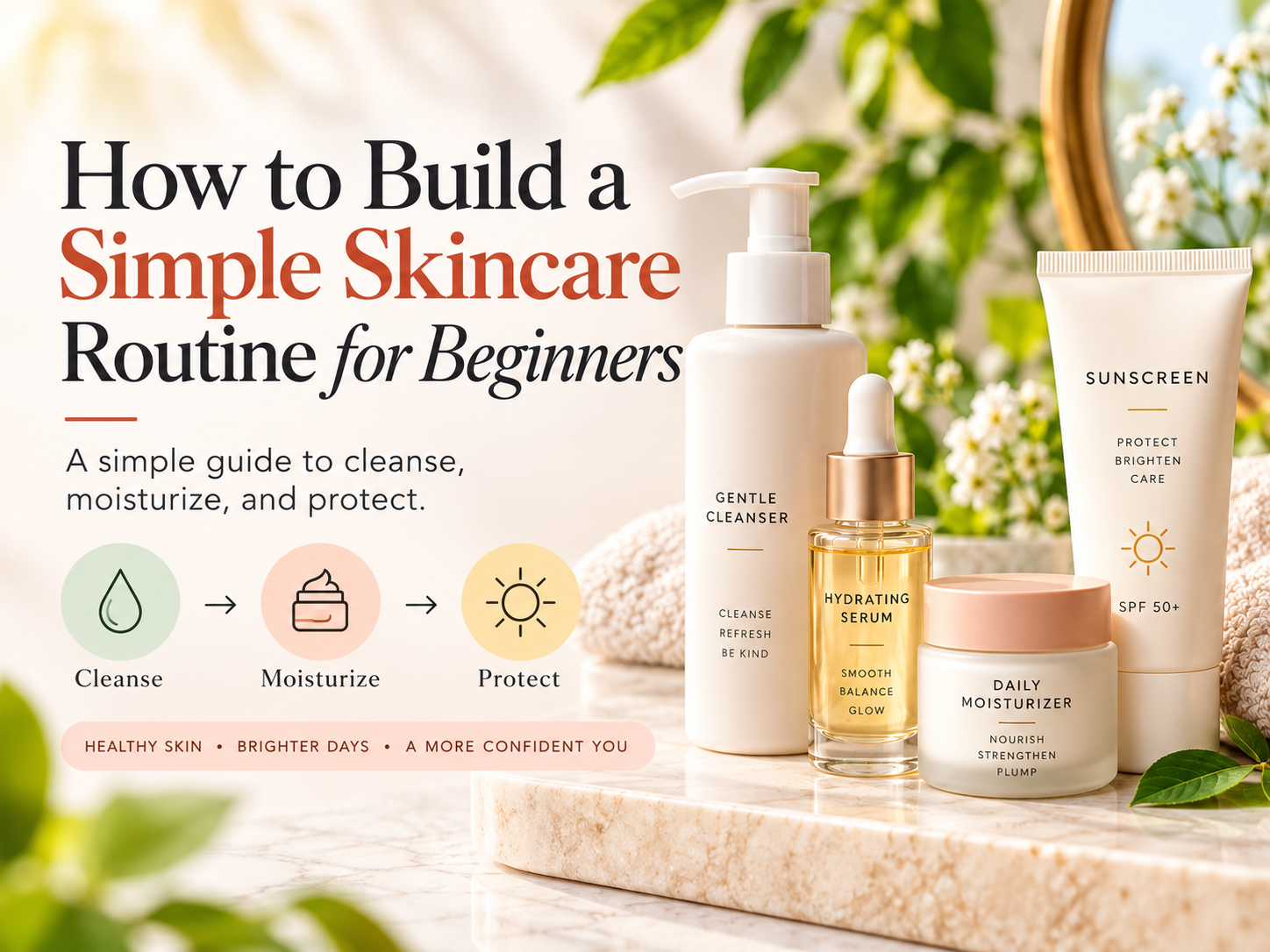
Cleanse. Moisturize. Protect.
Then gradually explore products that match your skin type and skincare goals.
Whether you’re interested in hydration, glow, K-Beauty, gentle cleansing, or targeted treatments, building your routine one product at a time makes it easier to understand what works for your skin.
Explore Skincare at Ravtar Shop
Looking for products to build your routine?
Explore carefully selected cleansers, serums, moisturizers, sun care, K-Beauty products, and other skincare essentials at Ravtar Shop.
Explore Beauty →
https://ravtarshop.com/beauty/
Explore K-Beauty →
https://ravtarshop.com/beauty/#kbeauty
Ravtar Shop may earn a commission from qualifying purchases made through selected affiliate links at no additional cost to you.
Frequently Asked Questions
What is the best skincare routine for a beginner?
Start with a gentle cleanser, moisturizer, and broad-spectrum SPF 30+ sunscreen. Once your skin adjusts, add targeted products gradually.
Do beginners need toner?
No. Toner is optional. A cleanser, moisturizer, and sunscreen are more important foundations.
Should I use serum every day?
It depends on the serum and its ingredients. Follow the product directions and introduce new active ingredients gradually.
Do I need a morning and nighttime skincare routine?
They can be slightly different. Your morning routine should prioritize sun protection, while your evening routine focuses on cleansing and moisturizing.
What is double cleansing?
Double cleansing typically involves using an oil-based cleanser first, followed by a water-based facial cleanser. It is commonly used to remove makeup, sunscreen, and daily buildup.
How long should a beginner skincare routine be?
There is no required number of steps. A simple three-step daytime routine can be enough to get started.