Creatine has become one of the most popular sports nutrition supplements, but if you are new to fitness supplements, you may still have plenty of questions. What does creatine actually do? How much should you take? Do you need a loading phase? And is creatine safe?
The good news is that Creatine is also one of the most extensively studied sports supplements. Research suggests that creatine monohydrate can improve strength, power, and performance during repeated short bursts of high-intensity exercise, particularly when combined with resistance training.
This creatine for beginners guide explains what creatine is, its potential benefits, how to use it, possible side effects, and what to consider before adding it to your routine.
Important: This article is for general educational purposes and is not medical advice. Supplements may not be appropriate for everyone. Speak with a qualified healthcare professional if you have a medical condition, take medication, are pregnant or breastfeeding, or have concerns about using creatine.
What Is Creatine?
Creatine is a naturally occurring compound made from amino acids. Your body produces creatine, and you can also get small amounts from foods such as meat and seafood.
Most creatine is stored in your muscles, where some of it is converted into phosphocreatine.
Phosphocreatine helps your body rapidly regenerate adenosine triphosphate, or ATP, which cells use for energy. This becomes particularly useful during short, intense activities such as weightlifting, jumping, sprinting, and repeated high-effort exercise.
Creatine supplements provide more creatine than most people obtain from food alone, allowing muscle creatine stores to increase over time.
Why Is Creatine So Popular?
Creatine is popular because it has been researched for decades and has evidence supporting its usefulness for certain types of exercise.
Unlike supplements that rely mainly on marketing claims, creatine has been studied in numerous clinical trials.
The greatest benefits appear to occur in activities requiring repeated, high-intensity muscular effort rather than long-duration endurance exercise.
That makes creatine particularly popular among people who participate in:
- Weight training and bodybuilding
- Sprinting and power-based sports
- High-intensity interval training
- Football, soccer, basketball, and similar intermittent sports
- Strength and resistance training
Creatine is not a substitute for training, adequate protein, balanced nutrition, sleep, and recovery. It works best as one part of an overall fitness routine.
Creatine Benefits for Beginners
1. May Help Improve Strength
One of the best-supported benefits of creatine is its ability to help improve performance during high-intensity exercise.
Increasing muscle creatine stores gives muscles greater access to the phosphocreatine system used to regenerate ATP during intense activity.
Studies reviewed by the U.S. National Institutes of Health have found that creatine supplementation can increase strength, power, and the amount of work performed during repeated maximal muscular efforts.
This can be particularly useful during resistance training.
2. May Support Muscle Growth With Resistance Training
Creatine is often associated with building muscle, but it is important to understand how it works.
Creatine itself does not replace resistance training.
Instead, improving training capacity may allow someone to perform more productive training over time. When combined with resistance exercise, creatine supplementation can contribute to improvements in lean body mass and strength.
That is why creatine is frequently included in strength-training and muscle-building programs.
3. Supports Short-Burst Exercise Performance
Creatine is particularly useful for activities involving repeated short bursts of intense effort.
Think about:
- Heavy lifting for several repetitions.
- A short sprint.
- Explosive jumps.
- Repeated intervals.
Creatine may help replenish energy more rapidly between these efforts.
However, creatine generally provides less benefit for purely endurance-based activities such as long-distance running, where the body relies more heavily on aerobic energy systems.
4. May Help You Handle Training Volume
Training progress often requires gradually increasing weight, repetitions, sets, or intensity.
Because creatine can improve high-intensity exercise capacity, it may help some people perform more work during their workouts.
Over weeks and months, that additional training stimulus may support greater strength and muscle adaptations.
Individual results vary, however. Not everyone responds to creatine supplementation to exactly the same degree.

What Type of Creatine Should Beginners Choose?
Walk into a supplement store and you may find several types of creatine:
Creatine monohydrate, buffered creatine, creatine hydrochloride, creatine ethyl ester, and other variations.
For most beginners, the simplest choice is also the most researched:
Creatine Monohydrate
Creatine monohydrate is the most widely researched form of creatine.
According to the NIH, alternative forms have not been proven superior to creatine monohydrate for improving muscle creatine levels, performance, stability, digestibility, or safety.
That means you generally do not need an expensive or complicated creatine formula just because the packaging claims it is more advanced.
A straightforward creatine monohydrate powder is often sufficient.
How Much Creatine Should Beginners Take?
A commonly studied maintenance dose for adults is:
3–5 grams of creatine monohydrate per day
This is one of the simplest ways for a beginner to use creatine.
With consistent daily supplementation, muscle creatine stores gradually increase.
Another method is to begin with a loading phase.
Do You Need a Creatine Loading Phase?
No. A loading phase is optional.
A commonly studied loading protocol is approximately 20 grams per day for 5–7 days, usually divided into four 5-gram servings. After that, users typically switch to 3–5 grams daily.
The purpose is to increase muscle creatine stores more quickly.
However, beginners can simply take around 3–5 grams each day without loading. It takes longer to achieve similar muscle saturation, but loading is not required.
Simple beginner approach
3–5 g creatine monohydrate once daily
This approach is convenient and may also reduce the likelihood of digestive discomfort that some people experience with larger loading doses.
When Is the Best Time to Take Creatine?
People often debate whether creatine should be taken before or after a workout.
Current research does not establish a clear advantage to either strategy.
Studies comparing creatine before versus after resistance training have found similar improvements, and researchers have concluded that evidence for an ideal creatine timing strategy remains limited.
For a beginner, consistency is more important than obsessing over the exact time.
You could take creatine:
- In the morning.
- With breakfast.
- Before training.
- After training.
- With a protein shake.
- With another regular daily meal.
Choose a time that makes it easy to remember every day.
Should You Take Creatine on Rest Days?
Yes, if you are following a daily creatine supplementation routine.
Creatine works largely by maintaining increased muscle creatine stores rather than acting like a stimulant immediately before exercise.
Therefore, daily use is generally more practical than taking it only on workout days.
If Tuesday is your rest day, you can still take your usual daily serving.

How to Take Creatine
Creatine monohydrate powder is easy to incorporate into most routines.
Measure the serving according to the product instructions and mix it with water or another beverage.
Some people mix creatine with: Water, juice, smoothies, protein shakes, or other workout beverages.
You do not need a complicated creatine drink to make the supplement work.
Always follow the serving instructions provided by the manufacturer.
How Long Does Creatine Take to Work?
That depends partly on how you use it.
With a loading phase, muscle creatine levels increase relatively quickly—usually within approximately a week.
When taking a smaller daily dose without loading, increasing muscle stores generally takes several weeks. The NIH notes that protocols around 3–6 grams per day for approximately 3–4 weeks can also increase muscle creatine stores without a loading phase.
Do not judge creatine based on a single workout.
Creatine supplementation is generally about consistency over time.
Does Creatine Cause Weight Gain?
It can.
One of the most commonly reported effects of creatine is an increase in body weight, particularly during the early stages of supplementation.
Part of this is related to increased water retention within muscle tissue. Studies have commonly reported increased body weight with creatine use, particularly alongside resistance training.
This does not automatically mean you are gaining body fat.
For someone focused entirely on keeping body weight low—for example, certain endurance or weight-class athletes—this increase may be an important consideration.
Does Creatine Cause Hair Loss?
This is one of the most common concerns surrounding creatine.
At present, there is not strong evidence demonstrating that creatine supplementation directly causes hair loss.
Much of the concern came from limited research examining hormonal changes rather than studies showing actual hair loss caused by creatine.
If hair loss is a significant personal concern, speak with a healthcare professional rather than relying on social-media claims.
Is Creatine a Steroid?
No.
Creatine is not an anabolic steroid.
It is a compound naturally produced by the human body and found in foods including meat and seafood.
Creatine and anabolic steroids work in very different ways.
The misconception may come from creatine’s association with bodybuilding and muscle growth, but calling creatine a steroid is inaccurate.
Is Creatine Safe?
For healthy adults using recommended amounts, creatine has a strong safety record compared with many other sports supplements.
The NIH notes relatively few safety concerns at commonly studied doses, while Mayo Clinic reports that studies in healthy people have not found recommended creatine doses to damage kidney function.
However, this does not mean creatine is appropriate for everyone.
People with existing kidney disease should discuss creatine with their healthcare provider before using it because research in people with kidney conditions is more limited.
It is also sensible to seek professional advice before using supplements during pregnancy or breastfeeding, when taking prescription medicines, or when managing a medical condition.
Possible Creatine Side Effects
The most commonly discussed effect is increased body weight from additional water retention.
Some users may also experience digestive discomfort, particularly when taking large amounts at once. Reported symptoms can include bloating, diarrhea, nausea, or stomach discomfort. Splitting a loading dose into smaller servings may help reduce digestive issues.
Taking a normal daily maintenance dose instead of loading may be easier for beginners.
Maintaining normal hydration habits is also important during exercise regardless of whether you use creatine.
Creatine and Kidney Blood Tests
Here is something beginners may not know.
Creatine supplements can influence creatinine, a substance commonly measured in blood tests used to assess kidney function.
Mayo Clinic notes that taking creatine can affect creatinine test results.
If you regularly use creatine and are having blood tests, tell your healthcare professional that you take it. This helps them interpret your results appropriately.
Do not stop prescribed medical care or make decisions about kidney health based solely on an online article.
Should Women Take Creatine?
Creatine is not a supplement exclusively for men.
Women also naturally produce and store creatine, and research includes both male and female participants.
The same general principles regarding resistance training, strength, daily supplementation, and individual response apply.
Supplement needs still vary between individuals, so personal health circumstances should always be considered.
Can Vegetarians and Vegans Use Creatine?
Creatine naturally occurs mainly in animal-derived foods such as meat and seafood.
People who eat vegetarian diets may therefore have lower baseline muscle creatine stores, and some research suggests they may experience larger increases in muscle creatine after supplementation.
Creatine monohydrate supplements themselves are commonly available in vegan-friendly formulations, but always check the individual product label and manufacturing information.
Creatine vs Protein Powder: Are They the Same?
No.
Creatine and protein perform different roles.
Protein provides amino acids your body uses to build and repair tissues, including muscle.
Creatine supports rapid energy availability during high-intensity muscular activity.
Someone may choose to use both, but one does not replace the other.
Your overall diet, adequate protein intake, resistance training, sleep, and recovery remain more important than relying on any single supplement.
What to Look for When Buying Creatine
For most beginners, keep it simple.
Look for a product that clearly lists creatine monohydrate as the primary ingredient and provides transparent serving information.
Third-party testing can also provide additional assurance regarding product identity and manufacturing quality. Mayo Clinic recommends choosing supplements produced using appropriate manufacturing practices and third-party quality testing.
Avoid assuming that a product is superior simply because it contains multiple forms of creatine or makes dramatic performance claims.
Explore Creatine and Fitness Supplements at Ravtar Shop
If you’re building a fitness and active-lifestyle routine, Ravtar Shop features a selection of wellness and sports nutrition products, including creatine monohydrate, protein supplements, vitamins, and other fitness essentials in its Health & Wellness collection.
👉 Explore Health & Wellness
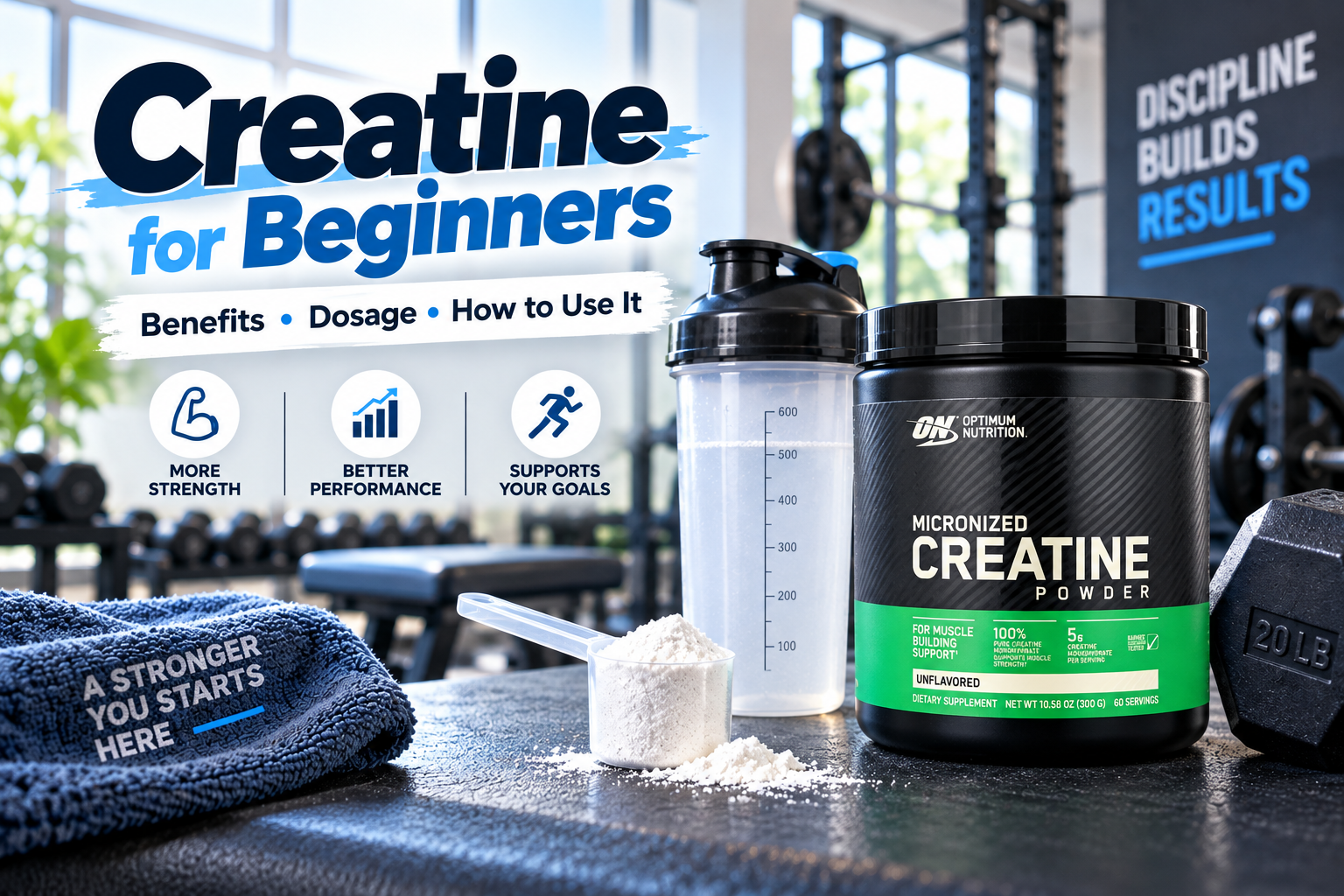
Ravtar Shop currently features Optimum Nutrition Micronized Creatine Powder, Unflavored within its Fitness & Active Lifestyle collection.
Affiliate Disclosure: Ravtar Shop participates in affiliate programs and may earn a commission from qualifying purchases made through selected links at no additional cost to you.
Frequently Asked Questions About Creatine
Is creatine good for beginners?
Creatine monohydrate can be an option for healthy adults who participate in resistance training or repeated high-intensity exercise. Beginners should first focus on consistent training, nutrition, sleep, and recovery.
How much creatine should a beginner take?
A commonly used maintenance amount is 3–5 grams of creatine monohydrate per day. Loading with approximately 20 grams daily for 5–7 days is an optional strategy rather than a requirement.
Do I need to load creatine?
No. Taking 3–5 grams every day can gradually increase muscle creatine stores without a loading phase.
Should I take creatine before or after a workout?
Either can work. Research has not established a clear advantage to taking creatine immediately before versus immediately after resistance training.
Can I take creatine every day?
Daily supplementation is commonly used because the goal is to maintain increased muscle creatine stores.
Does creatine burn fat?
Creatine is not a fat-burning supplement. Its primary established role in sports nutrition is supporting energy availability and performance during short, high-intensity activity.
Does creatine build muscle without exercise?
Creatine should not be viewed as a replacement for resistance training. Its muscle and strength benefits are most relevant when paired with an appropriate training program.
What is the best creatine for beginners?
Creatine monohydrate is generally the best-researched starting point. More expensive forms have not been consistently shown to outperform it.
Final Thoughts
For people researching creatine for beginners, the biggest takeaway is that you do not need to make supplementation complicated.
Creatine monohydrate has substantial research behind it for improving strength, power, high-intensity exercise performance, and resistance-training adaptations. A simple daily dose is commonly used, loading is optional, and the exact timing appears less important than consistent use.
But supplements are only one part of the picture.
Good nutrition, progressive training, adequate sleep, hydration, and recovery should come first. If you have health concerns or aren’t sure whether creatine is appropriate for you, speak with a qualified healthcare professional before starting.